Apple Watch sleep and snoring

Does Apple Watch detect snoring? What its sleep data can add to a report.

Apple's built-in sleep route estimates sleep from watch movement and can present sleep duration, stages, heart rate and respiratory rate. The official sleep documentation does not describe a continuous snore-audio feed for SomnoRoute: SomnoRoute's sound evidence comes from user-started phone monitoring, while a planned Apple Health route may add separately permitted context.

Product author: Mark McEnroe, SomnoRoute founder and product owner. Source review: SomnoRoute Editorial Team, updated 2 August 2026. Independent clinical review of health-context wording is pending. SomnoRoute is in private beta, Apple Health context is a planned capability, and no Apple Watch value makes a SomnoRoute report diagnostic. Read our editorial standards.

Straight answer

Keep snore audio and Watch data separate.

The distinction matters because sound, sleep stages and physiological measurements come from different sensors and may cover different parts of the night.

Where the snore recording comes from

SomnoRoute's user-started phone route records and analyses the sound environment beside the bed. Apple Watch sleep stages or breathing measurements should not be presented as if the Watch heard or classified a snore.

What Apple Watch may contribute

Depending on model, software, region, setup and recorded data, Apple Watch and the Health app may contain estimated sleep duration and stages, heart rate, respiratory rate, wrist-temperature trends or other context. SomnoRoute should show only categories supported by its planned beta route and specifically permitted by the user.

How a report can compare them

A report may place phone-recorded snore timing beside separately available sleep or wellness context. That can organise a night for review, but mismatched sample times, missing data and device estimates prevent a safe claim that one signal caused another.

Apple's separate sleep-apnoea feature

Some supported Apple Watch models and regions offer Apple's own sleep-apnoea notifications. That is a separate Apple feature, not a SomnoRoute result. Apple states that it is not intended to diagnose, treat or help manage sleep apnoea.

Permission and privacy

Apple Health access is granular and user controlled.

Ask only when the feature needs it

Apple requires apps to request permission for each HealthKit data type. SomnoRoute's planned route should request only the categories needed for optional report context.

Permission does not guarantee data

A user may deny a type, limit history, change access later or simply have no samples for that night. Apple also protects read-permission privacy, so an app may need to present the result as unavailable rather than infer why it is missing.

The report works without Apple data

Connected Apple context is optional. It should not block the core phone recording or be treated as a requirement for joining the private beta.

No advertising use or hidden write-back

SomnoRoute's published privacy position is that optional health context is used for the report workflow, not sold or used for advertising, and is not written back to Apple Health as part of this route.

Product evidence

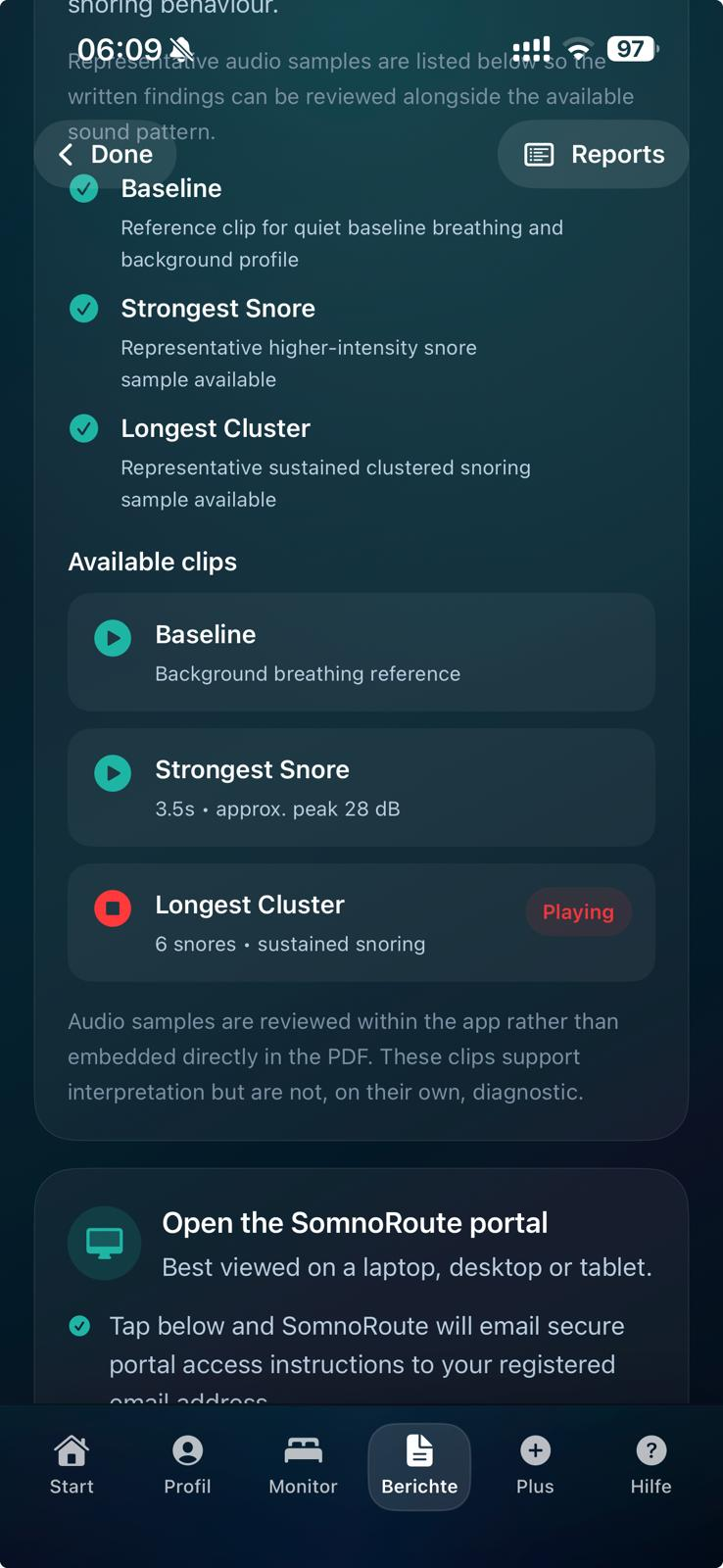
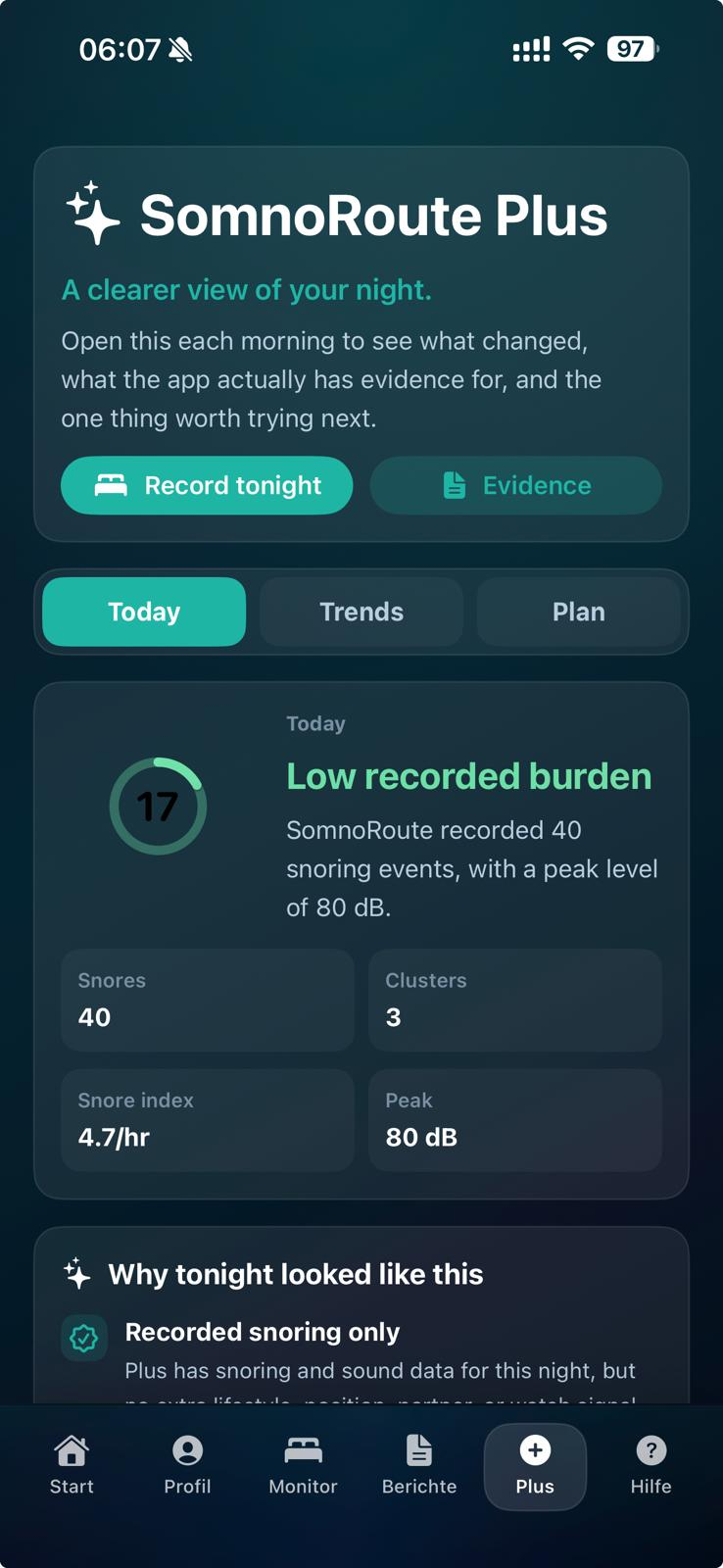
Current private-beta iPhone report screens.

These are SomnoRoute interface screenshots. They show the morning review and evidence workflow; they are not proof that an Apple Health category was available on a particular night.

Current private-beta SomnoRoute iPhone Plus screen showing a morning summary and recorded snoring evidence Current private-beta SomnoRoute iPhone report screen showing audio evidence and report navigation
What this shows

SomnoRoute's reporting workflow exists separately from connected Apple context.

The app can organise its own recorded evidence and report navigation. Apple Health context remains a planned, optional beta layer and should appear only when permission and data are available.

Comparison

Apple Watch data and SomnoRoute evidence do different jobs.

Apple Watch and Apple Health

Best treated as optional device-produced context: sleep estimates, heart or respiratory measurements and other supported records. Coverage and capabilities vary, and each field needs permission.

SomnoRoute phone monitoring

Provides the user-started sound route, snore-event review and SomnoRoute report evidence. It cannot identify the medical cause of a sound or turn Apple context into a diagnosis.

Formal sleep assessment

A consumer watch or phone report is not a replacement for a clinical assessment or validated sleep test. Persistent loud snoring, witnessed breathing pauses, choking, gasping or troublesome daytime sleepiness warrant professional advice.

Questions

Apple Watch and SomnoRoute FAQ.

Does Apple's built-in Apple Watch sleep route record snoring for SomnoRoute?

Apple's cited sleep documentation describes motion-based sleep estimates, sleep duration and stages, heart rate and respiratory rate; it does not describe a continuous snore-audio feed for SomnoRoute. SomnoRoute's snore evidence comes from its user-started phone monitoring route.

What Apple Watch data may SomnoRoute use?

SomnoRoute's planned private-beta Apple Health route may use specifically permitted and available sleep timing, stage, heart-rate, respiratory-rate or other supported health context. Availability varies by device, software, region, permissions and recorded data.

Are Apple Watch sleep-apnoea notifications a SomnoRoute diagnosis?

No. Apple's notifications are a separate feature on supported models and in supported regions. Apple states that the feature is not intended to diagnose, treat or manage sleep apnoea, and SomnoRoute does not turn it into a diagnosis.

Is SomnoRoute's Apple Health route generally available?

No. SomnoRoute is in private beta and Apple Health context remains a planned beta capability where permission and data are available. It is not generally available from the App Store.

Primary sources

Official Apple documentation used for this guide.

Apple Watch sleep tracking

Apple's sleep-tracking guidance explains motion-based sleep tracking, sleep stages, duration, heart rate, respiratory rate and model-dependent wrist-temperature context.